#TWIGE - 02 - Ryan Fox won The Open with an 8-iron shaft in his putter
Ryan Fox’s unusual Open-winning putter is a lesson in matching equipment to a stroke, rather than copying a champion’s specification.
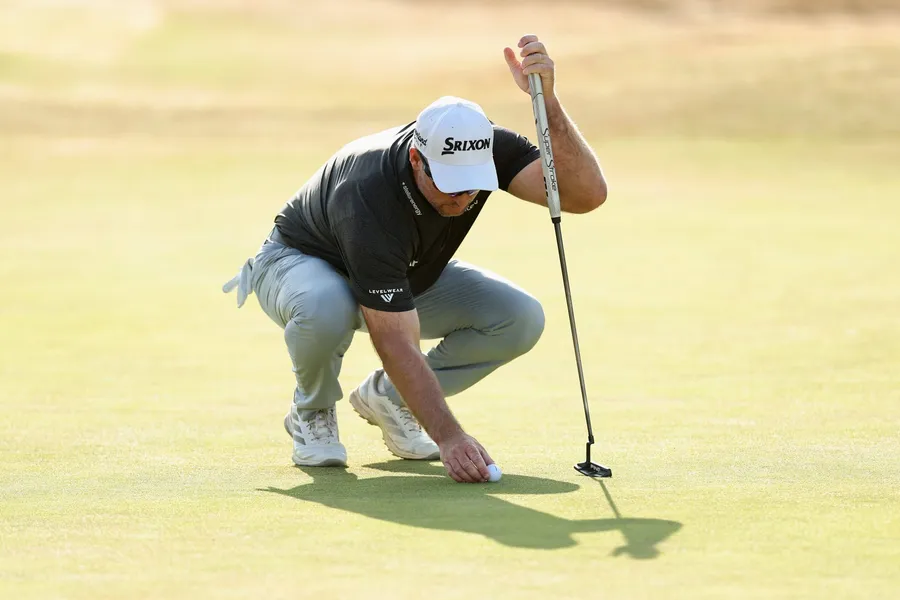
Photo supplied to TP Golf.
Ryan Fox stood on Royal Birkdale’s final green on 19 July with a putt to win The Open. He holed it from about 12 feet, beat Cameron Young by one and became Champion Golfer of the Year. The Open’s official report recorded the drama; the equipment story appeared when the specification of the putter became public.
The head was a PING Anser 2D, a deeper blade rather than an experimental shape. Almost everything attached to it was unusual. Fox’s build was 40 inches long, carried a 17-inch grip and used a KBS C-Taper 130 Black PVD 8-iron shaft. Its loft was 6.5 degrees, more than twice the standard 3 degrees listed for the retail 2023 Anser 2D.
It is the kind of detail that invites imitation. The better lesson is the opposite: copy the questions that led to the build, not the champion’s answer.
One familiar head, one personal build
PING’s UK specification for the 2023 Anser 2D listed a 360g head, 34-inch standard length, 3 degrees of loft and a graphite shaft. The slightly deeper, perimeter-weighted blade used heel and toe tungsten weights and a PEBAX face insert. Fox’s club therefore began with a recognisable retail head, then moved well away from its stock build.
Two independent equipment reports published on the Sunday explained why. GOLF reported that Fox had wanted a heavier feel and more stability, and had tried the stout iron shaft while playing in Europe several years earlier. It stayed. The same account listed the 40-inch length, 6.5-degree loft and 17-inch SuperStroke grip. Read GOLF’s dated winning-bag report.
Golf Digest added the relationship between loft and delivery. Fox uses a pronounced forward press, placing his hands ahead of the ball and reducing the loft presented at impact. The extra static loft was built in to account for that delivery. Its report counted 11 one-putts in the final round. Read the 19 July equipment analysis.
That does not prove that the shaft or loft won The Open. Fox made the strokes. Tournament performance also reflects read, pace, confidence and conditions, and a single week cannot isolate the equipment’s contribution. The result does show that an unconventional build can be entirely rational when its purpose is understood.
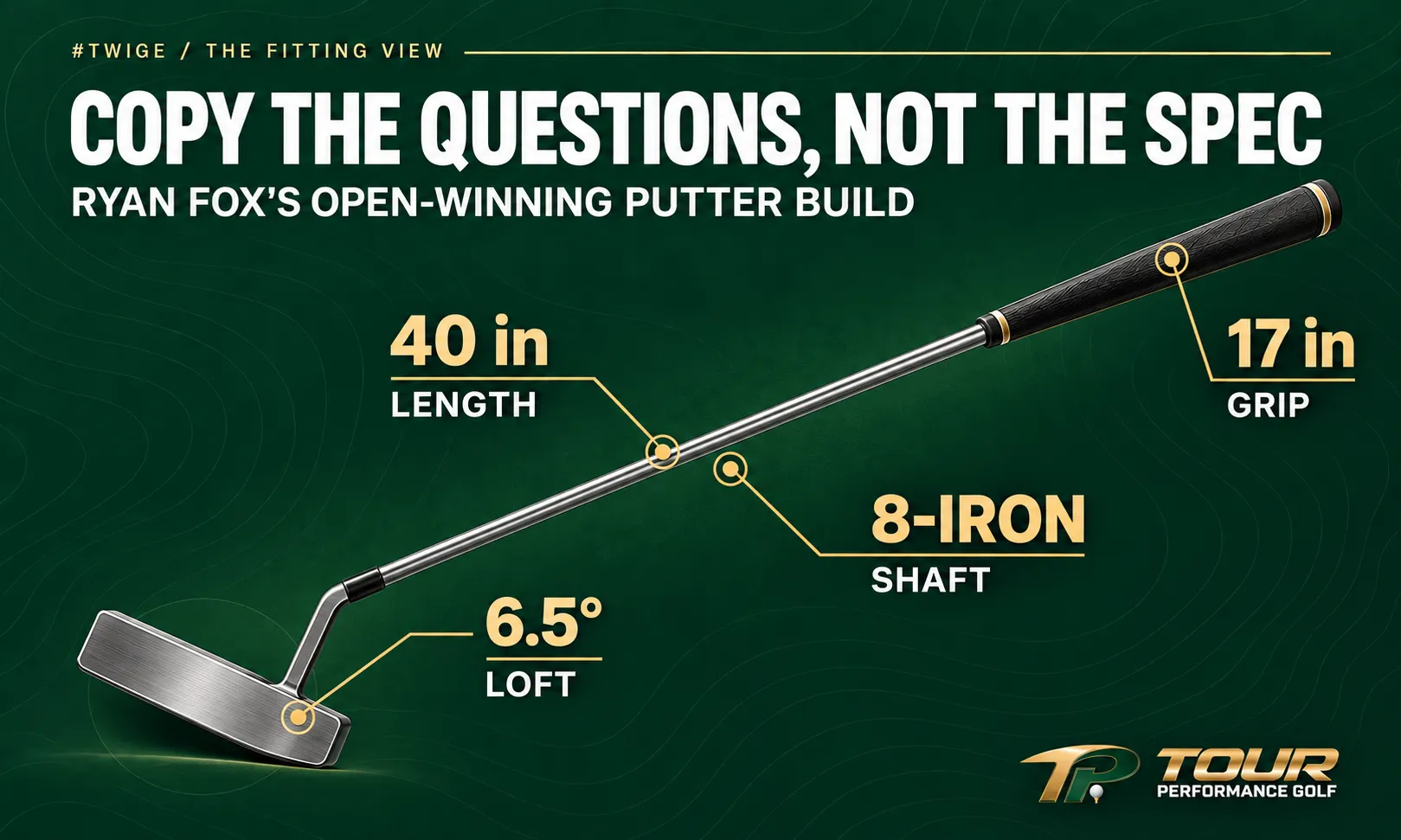
Schematic illustration of the reported build dimensions.
The statistics need the same restraint
Contemporary accounts agreed that Fox led the field in strokes gained putting, although they reported the margin differently. We therefore do not use a precise figure here. Golf Monthly’s 20 July follow-up also described his armlock-style action, for which the longer grip rests against the forearm.
The equipment attracted attention beyond conventional reports. GolfWRX published a winning-bag video on 20 July, and a same-day r/GolfGear post linked the WITB. The equipment-specific discussion was much smaller than the public reaction to Fox’s win, so it cannot establish golfer consensus about the unusual build.
What a golfer can take from it
Static loft is only the starting number. Ball position, shaft lean, rise angle and strike determine the loft actually delivered to the ball. Adding loft because Fox used 6.5 degrees could create the wrong launch for a golfer with neutral hands. Removing loft because 3 degrees looks standard could be equally unhelpful for someone with a strong forward press.
The shaft question is also about response rather than category. An iron shaft can make a putter feel heavier and stiffer, but the useful test is whether that changes face control, strike and pace in a repeatable way. Length, total weight, swingweight, grip size and balance interact. Changing one part can alter the feel of the whole club.
A sensible comparison starts with the golfer’s existing stroke. Measure delivered loft and face angle if suitable technology is available. On the green, look at starting direction, strike location and distance control across short and long putts. Keep the current putter in the test, and record misses as carefully as makes.
Fox’s build is fascinating because every unusual number appears to have a job. The extra length supports his method. The long grip suits the way it rests against his forearm. The 6.5-degree loft accounts for his forward press. The iron shaft gives the feel and stability he sought.
That sequence is worth borrowing. Define how the golfer delivers the club, identify the problem and build towards a measured result. An Open-winning specification can inspire the investigation. It cannot supply another golfer’s answer.
TWIGE — This Week in Golf Equipment. #TWIGE