#TWIGE - 11 - Cobra’s 3D-printed iron makes forgiveness harder to define
A September review praised the compact Cobra 3DP Tour for its consistency. An earlier group test reached a different verdict — and that is useful fitting evidence.
This Week in Golf Equipment · Edition 11 · Reporting through 17 September 2026
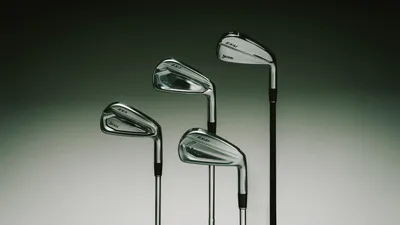
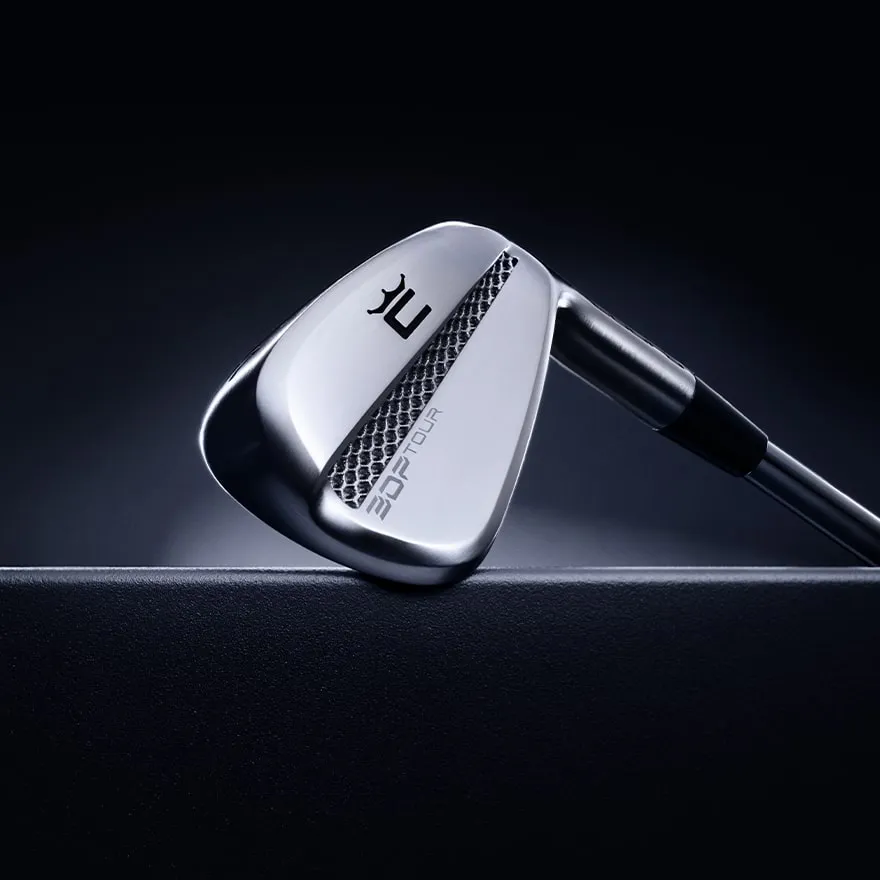
Product photograph: COBRA Golf.
Compact irons still have to produce a useful flight for the golfer swinging them.
The Cobra 3DP Tour iron received an emphatic independent endorsement on 17 September. Plugged In Golf’s Matt Saternus tested the set over four sessions and described ball speed, spin and launch as unusually stable for such a compact head.
That sounds like a clean validation of Cobra’s central claim: 3D printing can put game-improvement forgiveness inside a player’s shape.
There is a complication. MyGolfSpy’s larger 2025 player-iron test found strong distance and above-average accuracy from the same model, but scored its forgiveness below average. Both findings can be honestly reported. The difference is a reminder that “forgiving” is not one measurement, and it is not the same result for every golfer.
What the printing changes
Cobra says each head is built from 2,600 laser-fused layers of 316 stainless-steel powder. The process allows an internal lattice to replace material that would normally fill the centre of the head. Weight can then be repositioned around the perimeter, including tungsten in the heel and toe.
The company attributes a higher moment of inertia, lower centre of gravity and more stable off-centre performance to that construction. It also calls the result a compact blade with game-improvement forgiveness. Those are Cobra’s design and performance claims, rather than guarantees for an individual player.
The shape and specification are concrete. The 7-iron is 31 degrees, with 2.1mm of offset and a stock length of 37.25 inches. The pitching wedge is 45 degrees. Those lofts are not unusually strong for a modern player’s iron, so any useful distance claim needs to be considered alongside ball speed, launch, spin and where the shot finishes.
Two tests, two meanings of forgiveness
Saternus’s 17 September review was based on one experienced player using the set across several sessions. He found repeatable speed, spin and launch, playable 10–13-yard gaps and enough spin to hold greens. His reservation concerned the long end: producing the full 4-iron distance still required enough speed and a good strike. He advised average- or lower-speed players to make a deliberate decision about where irons should give way to hybrids or fairway woods.
That is useful evidence with a clear scope. It shows what the clubs did for one golfer, with his delivery. It does not establish that every golfer will receive game-improvement consistency.
MyGolfSpy’s player-iron result used a different method and scoring definition. The 3DP Tour finished second for distance and above average for accuracy, eighth overall, but below average in the organisation’s forgiveness category because some consistency measures were weaker. The site therefore recommended it for controllable distance and accuracy, while warning both about consistency and its high price.
Golf Digest added another useful sample. Its 2026 Hot List drew on a 32-player, 20,000-shot testing programme across the wider equipment range. The 3DP Tour placed in the top five for low-handicap performance; seven named low-handicap testers commented on its product page. They described a compact look with more stability than expected. The published process and feedback support the proposition that the design is credible; they do not collapse the disagreement between the other two tests.
The apparent conflict comes partly from what each source calls forgiveness. It can mean preserving ball speed on a mishit, keeping carry distance consistent, reducing left-to-right dispersion, maintaining launch and spin, or simply making a small head less punishing than it looks. A club can score well in one of those jobs and less well in another.
Price is part of the fitting decision
The early public discussion under the 17 September review was interested but cautious. One reader described the price as out of reach; another asked whether the improvement over their existing irons would be large enough to matter. Saternus replied that he expected a performance gain, but not a huge difference.
That is the right scale for the decision. An expensive manufacturing method can create genuine design freedom without creating an automatic upgrade.
A useful fitting should begin with the current iron, not the internal lattice. Compare the whole pattern from a short iron, a mid-iron and the longest iron you expect to carry. Look at carry gaps, peak height and descent angle as well as the best ball speed. Mark strike location and see what happens to launch and spin when impact moves away from the centre.
The long-iron boundary matters most. A compact 4-iron that looks superb but arrives too low to hold a green is not forgiving in the way that shot requires. A hybrid or higher-launching iron may create a better set even if its shape is less elegant.
Cobra has demonstrated that additive manufacturing can make a compact iron behave differently. The independent evidence is strong enough to justify a trial, and mixed enough to rule out buying the promise alone.
The printed lattice is the clever part. The shot pattern still decides whether it is useful.
TWIGE — This Week in Golf Equipment. #TWIGE