#TWIGE - 12 - Direct-to-consumer irons move the fitting cost, not the fitting question
September UK discussion and independent test data make a strong case for DTC iron value. The buying route still has to produce a specification you can trust.
This Week in Golf Equipment · Edition 12 · Reporting through 24 September 2026
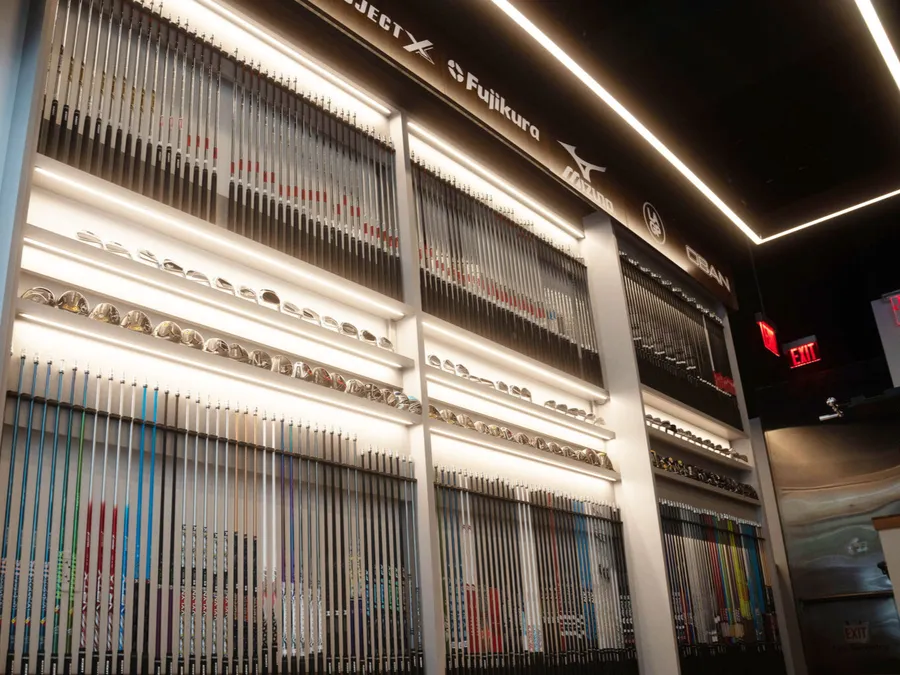
A fitting display gives the golfer different shafts and heads to compare.
Two pieces of evidence from September give this buying question its shape. On 11 September, Golf Monthly published a summary of UK forum experiences with Takomo, Sub 70, Haywood and other smaller brands. On 15 September, MyGolfSpy’s analysis of more than 40 irons named the Takomo 101 MKII the most accurate game-improvement model in its 2026 test. Neither was a new launch; together they make it worth asking what a golfer gives up, and what they can keep, when they buy outside the usual retail route.
That combination moves the discussion beyond “cheap clubs from the internet”. Some DTC irons have credible independent results and materially lower prices. The unresolved question is how a golfer gets from an attractive test score to the right head, shaft, length and lie.
The direct model removes some retail cost. It does not remove the need to compare equipment.
The value is real, but it has a shape
Takomo’s UK page listed the Iron 101 MKII at £529 for a 5-GW set when checked on 5 October. Its stock-order policy allows the buyer to hit the 7-iron and request a return within 30 calendar days of delivery, provided the other heads remain unused with their covers intact. The buyer pays return shipping. A custom-built set cannot be returned for a change of mind. Those conditions are part of the product decision, not small print to read after ordering.
The performance case is stronger than price alone. MyGolfSpy’s 2026 game-improvement test gave the Takomo 101 MKII a 9.2 overall score, including 9.5 for accuracy and 9.1 for forgiveness. Its 15 September cross-category analysis says testers hit a 5-iron, 7-iron and pitching wedge, so the score was not built from one flattering club.
The detailed data add restraint. The 101 MKII carried about 1.5 yards shorter than the game-improvement test average and produced slightly less ball speed. Its advantage came from straight-shot percentage, proximity and greens in regulation. That is a better value story than claiming inexpensive irons simply perform “99.9 per cent” like a dearer set. They won a particular test by doing particular jobs well.
DTC does not always mean no fitting
The Golf Monthly forum synthesis captured both sides. Owners praised Sub 70 and Ben Hogan irons; other golfers were reluctant to order without hitting the heads first. One Sub 70 owner reported travelling for a comprehensive single-brand fitting and noted that DTC prices had begun to creep upwards.
The article is a small sample of named forum comments, not a market survey. It does expose an outdated assumption: fitting access varies by brand rather than disappearing altogether.
Sub 70’s UK operation advertises custom fitting support from its Glasgow base. Haywood maintains a dealer and fitting-partner locator, while warning that available heads, fitting services and prices vary by location. Takomo offers an online recommendation tool and the stock-set 7-iron trial. These are different buying models, with different levels of comparison.
A single-brand fitting can match length, lie, shaft and head within that brand. It cannot show whether a competitor produces a better flight. An online questionnaire can narrow a starting point, but it does not measure delivery or show the golfer what the club does. A returnable 7-iron gives genuine hitting evidence, but it leaves the buyer to arrange suitable measurement and compare it fairly with the current set.
Spend some of the saving on certainty
Before ordering, define the job. Is the current set launching too low, leaving a gap at the long end, producing unpredictable carry, or simply worn? That answer determines what needs measuring.
Use a comparable head and shaft in a local fitting to establish a sensible weight, flex profile, length and lie. Keep the result as a starting specification rather than treating one recommended model as a transferable clone. Head weight, hosel construction and finished swing weight can change how the same shaft feels.
If the DTC brand offers a demo or returnable test club, compare it with the current iron using the same ball. Record carry, peak height, descent angle and the full left-to-right and short-to-long pattern. Check the gap into the next club at both ends of the set. A seven-club bargain is less useful if the longest two irons fly the same distance or the pitching wedge creates a large gap to the first specialist wedge.
Then price the whole decision: delivery, return shipping, any non-refundable custom work, loft-and-lie checks and possible grip or shaft changes. The DTC set can still be excellent value after those costs. The point is to compare completed, usable specifications rather than headline set prices.
Direct-to-consumer brands are no longer asking golfers to overlook performance for the sake of price. The strongest independent results show they can compete directly.
Their lower overhead is an advantage. Use part of it to make sure the club arriving at the door is the one your game needs.
TWIGE — This Week in Golf Equipment. #TWIGE