#TWIGE - 10 - Mizuno’s S-4 and the problem with the 7-iron distance contest
Mizuno’s latest forged iron has started a debate about categories, forgiveness and distance. Its lofts help explain why the longest shot is only part of the story.
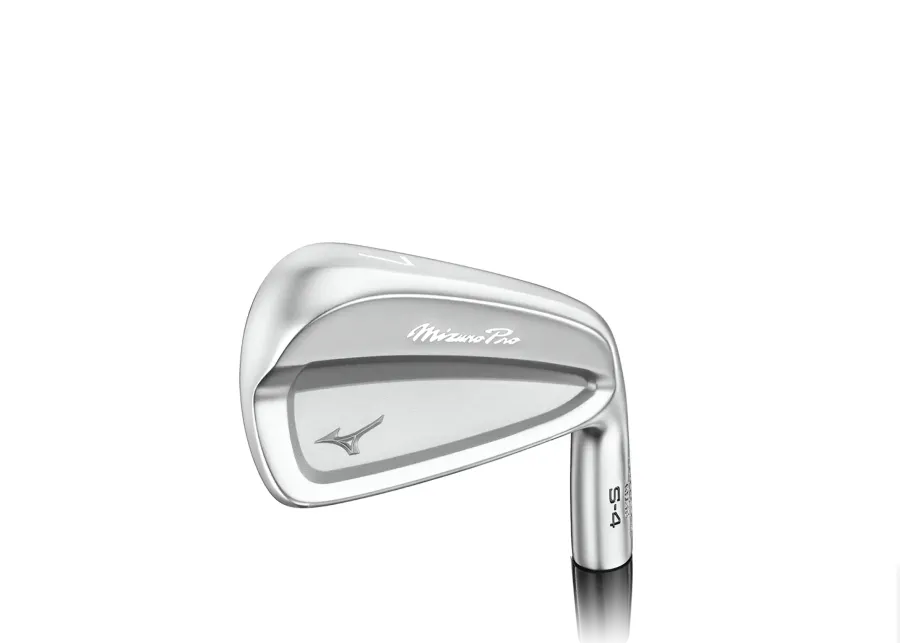
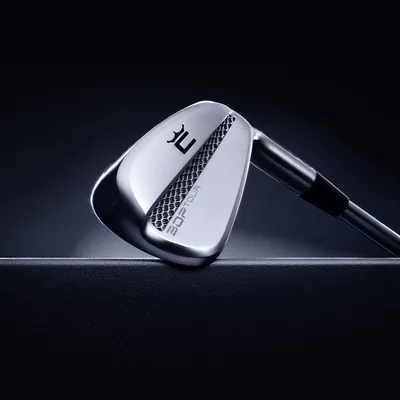
Mizuno Pro S-4. Product photograph: Mizuno Golf.
This Week in Golf Equipment · Edition 10 · Reporting through 9 September 2026
Put a new 7-iron in a golfer’s hands and the distance number can quickly become the verdict. Longer looks like progress. Shorter needs explaining. Mizuno’s new Pro S-4 makes that comparison worth slowing down: its published 7-iron loft is 34 degrees.
The S-4 appeared in launch coverage and independent reviews on 3 September. It has already prompted disagreement about where it belongs. Is it a more accommodating traditional players’ iron, a new category between familiar categories, or another difficult choice in an increasingly busy range?
That disagreement is more useful than a unanimous round of launch-day applause. It exposes the questions a golfer should ask before deciding that a new iron is either too short or exactly what they need.
The Problem with the Seven-Iron Distance Contest
A “7” on the sole does not mean two clubs are built the same way. Take loft: the angle at which the face tilts back. Mizuno lists the S-4 7-iron at 34 degrees, while the standard PING G430 7-iron is 29 degrees. The lower angle is called a stronger loft, and it can contribute to more distance. If one 7-iron flies further, part of that difference may come from its specification. You have not necessarily found a better club simply because both have the same number stamped on them.
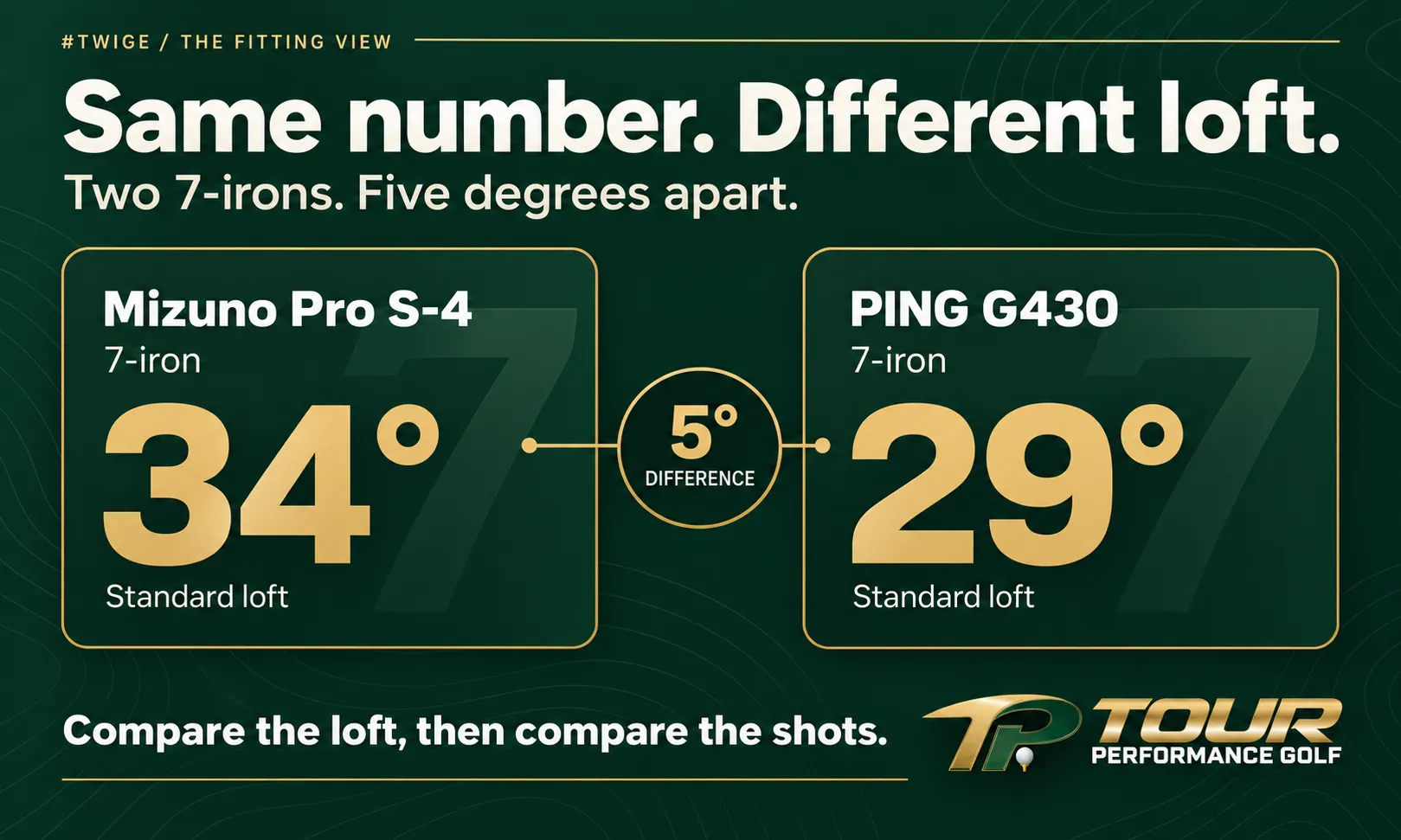
Five degrees separate these two 7-irons — which is why the loft matters when comparing how far they fly.
That is the problem with the distance contest: it gives the biggest number the prize before asking whether those yards help. Extra distance can be useful, but the ball also needs to stop on the green, travel a predictable distance and leave sensible gaps to the clubs either side. Loft is only part of the design, so compare the actual shots as well as the specifications. The better iron is the one that gives you a shot you can rely on.
A familiar construction with a specific job
Mizuno describes a single-piece 1025E carbon-steel forging, with copper underlay and revised shaping to position mass lower in the head. The company says the wider sole, deeper centre of gravity and progressive geometry are intended to make launch and forgiveness more accessible while retaining a traditional forged-iron character. Its Triple Cut sole has bevelled leading and trailing edges. These are the manufacturer’s construction details and intended benefits.
The opportunity for the golfer is to discover whether the extra help arrives where the current set runs out of it. That might be a long iron that is difficult to launch, a strike pattern that spreads when the swing gets tired, or a sole that feels awkward through the turf.
Those are different problems. A club that helps one of them should not automatically receive credit for solving the others.
The early reviews do not tell one story
John Barba’s MyGolfSpy first look argues that the S-4 belongs in an emerging “player’s performance” category. He makes clear that this is his classification, rather than Mizuno’s name for the club. The article’s reader discussion includes interest in set combinations and scepticism about needing another category. That is a useful debate, not evidence of a market-wide shift.
The hands-on accounts are more revealing still. In Golfalot’s test, George Stead liked the long-iron launch and turf interaction but questioned the distance, value and place in the range. His account of the impact sensation was restrained. Golf Monthly’s Joe Ferguson was considerably more enthusiastic about the club’s traditional simplicity and the experience of using it.
Neither reaction tells you how the iron will feel in your hands. Together they are a good warning against treating a familiar forging story as a guaranteed personal response. A golfer can appreciate the engineering and still prefer something else.
There is a similar trap in distance comparisons. Golfalot reported 163.5 yards of average 7-iron carry in its test, but that belongs to its tester and setup. It is not a target distance for a buyer, and it cannot establish how the S-4 will perform against your own club.
Build the comparison around the shots
Start by writing down what you want the new iron to change. “More forgiving” becomes more useful when it means a smaller loss of carry on your common miss, or a long iron that reaches a playable height more consistently.
Then compare the actual specifications as well as the number on the sole. Test the clubs as complete playing options: loft is relevant, but so are shaft, length, strike and the flight they produce together. Avoid deciding that two differently specified 7-irons are equivalent just because they share a number.
Keep enough shots to see the pattern. The longest swing should not erase the short one that would have found the front bunker. Look at carry, the spread of the shots and how the ball arrives. A fitter should be able to explain which trade-off is being made, rather than merely point to the most flattering result on the screen.
Also try a longer iron and a scoring club before committing to a set. The part that impresses with a 7-iron may not be the part that causes trouble on the course. If you are considering a mixed set, test the clubs either side of the transition; a neat progression in a specification table does not demonstrate a useful progression in your carry distances.
Mizuno has added another option for golfers who enjoy a traditional iron but want help in particular places. The convincing case for buying it will be a set of shots that works better for you. The 7-iron distance number can contribute to that case. It should not get the casting vote.
TWIGE — This Week in Golf Equipment. #TWIGE