#TWIGE - 08 - Callaway ends its Good Good partnership
Callaway ended its Good Good relationship on 27 August after a co-branded driver advert. The equipment story is about approval, accountability and what remains unresolved.
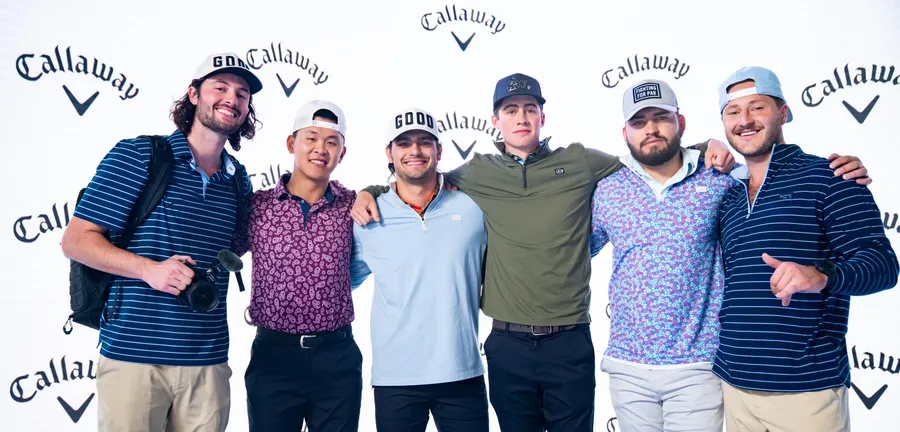
The partnership announcement in 2023. Photo: © Callaway Golf Company. Used by permission. All rights reserved..
On 27 August, Callaway ended its three-year relationship with Good Good Golf with immediate effect. The decision followed a co-branded driver advert that both companies had removed a week earlier after widespread criticism.
Callaway’s final statement did more than announce a split. The company said its content-review process had not been comprehensive enough, that it had taken internal corrective action and strengthened its approval procedures. It also committed $1 million to organisations working to prevent violence against women, support survivors and advance education and awareness.
This was equipment news because the advert existed to sell a collaborative Callaway Quantum driver. The product, the creator partnership and the audience were part of one commercial offer. When the marketing failed, the consequences extended well beyond a withdrawn post.
What happened, and when
The advert was posted and removed on 20 August. It depicted a man pushing a woman to the ground after she reached for the driver. Good Good said the concept was intended as a parody, but that explanation did not settle the criticism.
On 25 August, Callaway chief executive Chip Brewer acknowledged in a company statement that Good Good had produced the video and Callaway had approved it before publication. He said the approval should not have happened, and that internal and external investigations had begun. Good Good chief executive Matt Kendrick also accepted responsibility in a public statement and said his company was changing its creative review process.
The decisive development for this edition came two days later. Callaway said it had completed its review and ended the partnership. Good Good then withdrew as title sponsor of a planned PGA Tour event in Austin. The PGA Tour said the tournament would continue. Associated Press reporting corroborated the sequence and the companies’ stated actions.
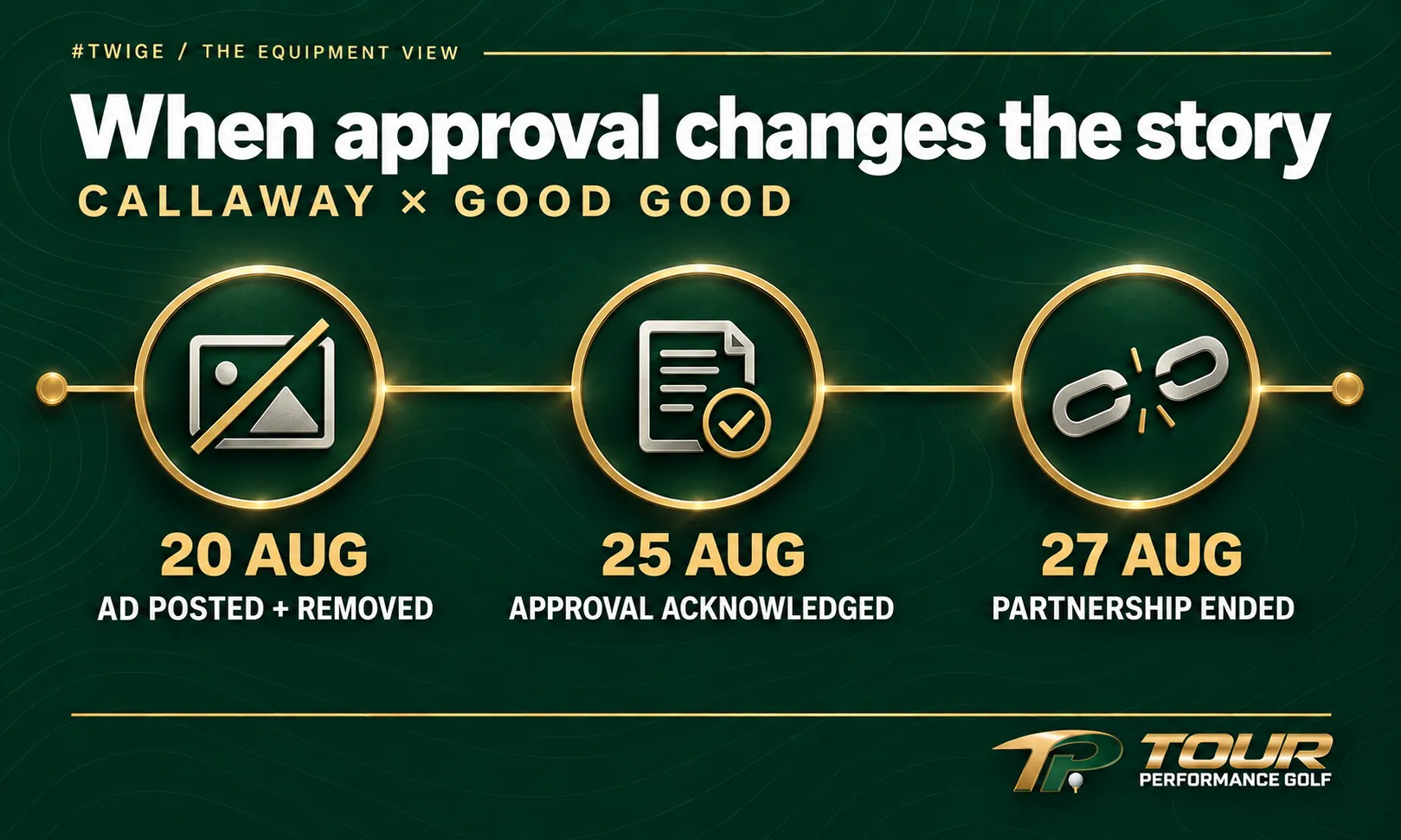
The sequence from the advert’s removal to the end of the partnership.
Approval changed the responsibility
The most consequential sentence in the week’s statements was Callaway’s acknowledgement that it approved the advert. That moved the issue beyond the conduct of an independent creator. A co-branded campaign had passed through both sides of the partnership and reached the public with the equipment maker’s consent.
The later response was concrete in three respects: the commercial relationship ended, approval procedures were strengthened and funding was committed. The statements did not identify who approved the content, explain the old or new review stages, name the recipient organisations or set out how the procedural change would be assessed. That does not make the actions meaningless. It marks the boundary between what was announced and what the public could verify at the time.
The TP Golf view: this should never have passed approval
Portraying violence against a woman as a joke to sell a golf club was unacceptable. The failure began with the concept itself. How did it survive filming, editing and approval by both businesses? Every stage offered an opportunity for somebody to recognise the problem and stop it. Everyone responsible for creating, commissioning and approving the advert should have demanded better.
Our criticism concerns the judgement behind what was produced and published. We are not alleging that Good Good or Callaway condones violence, and we do not read the video as an expression of that intent. The stated parody explanation still cannot excuse the decision to use this premise in a golf advert. Intent does not remove responsibility for the result.
The initial response also fell short. As GOLF.com’s account of the statements records, Callaway initially expressed disappointment in the content, welcomed Good Good addressing it and looked forward to continuing the relationship. Only later did its chief executive publicly acknowledge Callaway’s own approval. In our view, that progression failed to give a clear account of shared responsibility when it was first needed.
There is a wider warning for golf’s growing creator businesses. Golfing talent and the ability to build an audience do not automatically bring editorial experience or sound judgement about sensitive subjects. As talented golfers move into content creation and their channels become substantial commercial operations, those businesses need experienced reviewers, clear approval responsibilities and people with the authority to stop a bad idea before it reaches an audience.
The publication of this advert, followed by the inadequate initial response, should prompt a hard look across the golf creator sector at how content is commissioned, moderated and approved. Brand partners share that responsibility. Editorial oversight needs to be part of everyday production, with a clear response when something goes wrong.
The public response was about governance as well as taste
The contemporary discussion was substantial but not uniform. A large r/golf discussion on 25 August focused repeatedly on how the concept had been approved. A WomenGolf discussion on 27 August considered Callaway’s decision and the response it received. Some comments considered Callaway’s action necessary; others called it an overreaction. The recurring question was whether accountability matched the scale of the approval failure.
Independent reporting reached a similar factual centre. GOLF.com documented the progression from the initial statements to Brewer’s acknowledgement and the terminated partnership. AP separately confirmed the event-sponsorship consequence and Callaway’s announced actions. Neither source establishes how UK customers as a whole responded.
What this means for an equipment buyer
The reviewed statements and reporting did not identify a technical defect in the co-branded driver, announce a safety recall or connect the decision to its measured performance. Golfers can separate those product questions from a judgement about the organisations behind it.
They can also decide that the seller’s behaviour is part of value. Equipment is bought through trust: that specifications are accurate, partnerships are chosen with care and a company will respond properly when something goes wrong. In this case, the approval failure was admitted. The remedial actions were announced. Whether they are sufficient is a judgement each golfer can make from the record, without inventing a performance problem or pretending the marketing does not matter.
For TP Golf, the useful standard is straightforward. Assess the club on evidence and fit; assess the company on what it says and does. Keep those judgements distinct, and require support for both.
TWIGE — This Week in Golf Equipment. #TWIGE